
A Mark - Thursday Devotional
1 Peter 3:13-22 (CEB)
Who will harm you if you are zealous for good? But happy are you, even if you suffer because of righteousness! Don’t be terrified or upset by them. Instead, regard Christ the Lord as holy in your hearts. Whenever anyone asks you to speak of your hope, be ready to defend it. Yet do this with respectful humility, maintaining a good conscience. Act in this way so that those who malign your good lifestyle in Christ may be ashamed when they slander you. It is better to suffer for doing good (if this could possibly be God’s will) than for doing evil.
Christ himself suffered on account of sins, once for all, the righteous one on behalf of the unrighteous. He did this in order to bring you into the presence of God. Christ was put to death as a human, but made alive by the Spirit. And it was by the Spirit that he went to preach to the spirits in prison. In the past, these spirits were disobedient - when God patiently waited during the time of Noah. Noah built an ark in which a few (that is, eight) lives were rescued through water. Baptism is like that. It saves you now - not because it removes dirt from your body but because it is the mark of a good conscience toward God. Your salvation comes through the resurrection of Jesus Christ, who is at God’s right side. Now that he has gone into heaven, he rules over all angels, authorities, and powers.
Written to Christians in five Roman provinces in modern-day Turkey, the New Testament letter of 1 Peter offers encouragement to those facing severe persecution for their faith. The author reminds them of Christ’s redemption and salvation and urges them to remain united with one another. Scholars consider the letter pseudonymous (written by a later follower in Peter’s name) and date its writing between 75 and 90 AD.
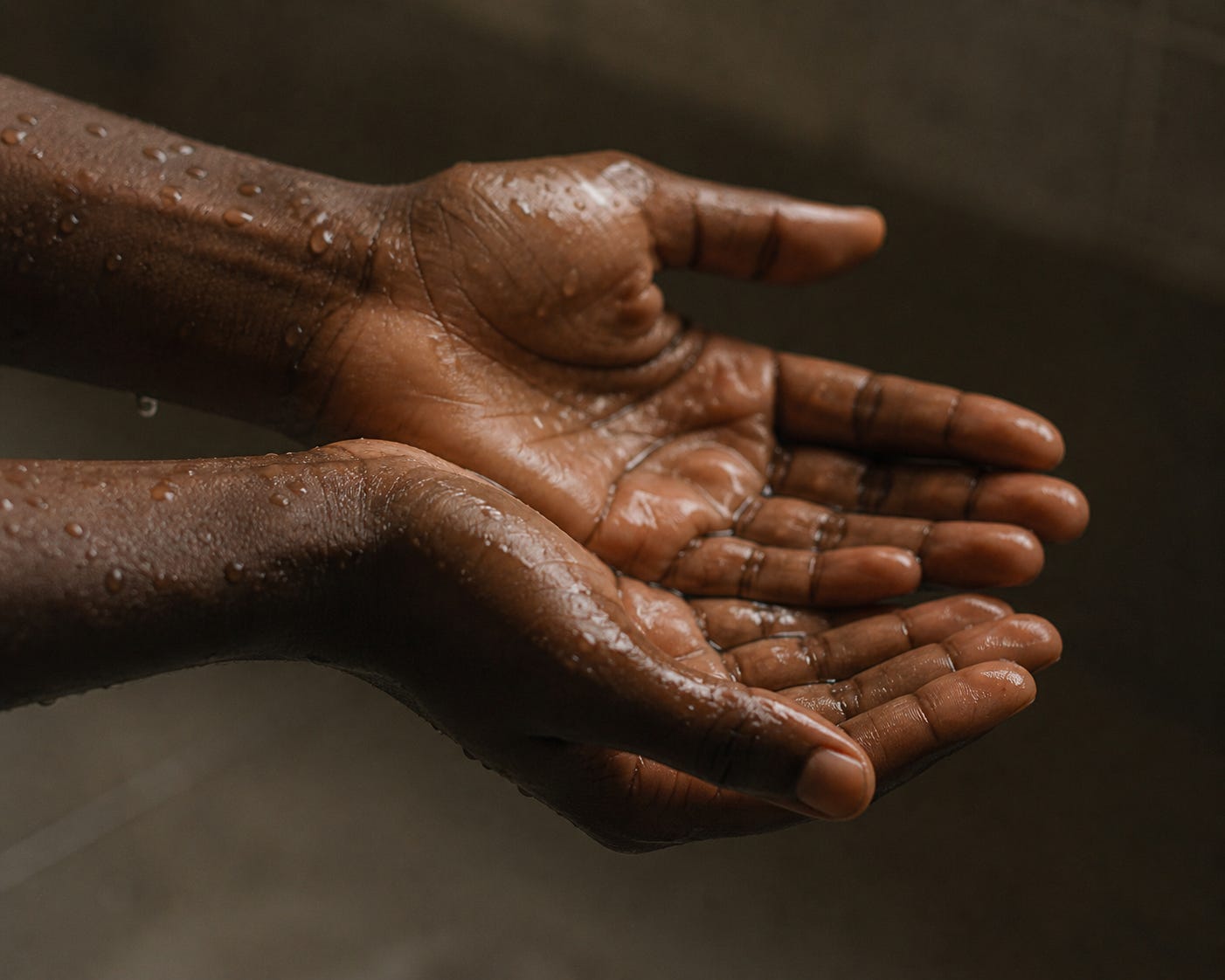
1 Peter 3:18–22 highlights baptism as a means by which a community enters and sustains a distinct way of life. For the author, baptism carries more than symbolic meaning. Instead, it functions as a public commitment that shapes shared relationships and responsibilities.
While we might view baptism as a one-time ritual marking a single moment of belonging, this passage presses for a more expansive understanding. We typically treat baptism like a date written in a family Bible or a photograph that sits quietly among other milestones. This text instead describes baptism as “the mark of a good conscience toward God,” which points toward something that remains active and recognizable over time. A mark suggests a visible imprint, like a signature on a contract or a seal pressed into wax, showing that a life carries a certain kind of claim and accountability. Baptism, then, names the beginning of a life in which daily choices and ways of treating others align with our communal Christian commitments.
The reference to Noah deepens this meaning by placing baptism within a story of transition and re-creation. The flood narrative describes a world unraveling under its own violence and a small community carried through the waters into a reality that must be rebuilt from the ground up. The work after the waters recede involves planting fields, building shelters, reordering relationships, and learning how to live differently in the changed world. Baptism requires participation in a similar post-flood movement, where people step into a new way of life.
Baptism is a communal practice that shapes how people relate to one another, respond to conflict, and remain accountable within our shared lives. Our faith takes on a visible mark through love, kindness, and generosity that others can recognize. May we keep that baptismal mark in the ordinary moments of our lives - letting love guide our presence, letting kindness shape our words, and letting generosity open our hearts to one another.
- Rev. Roy Atwood